In This Article
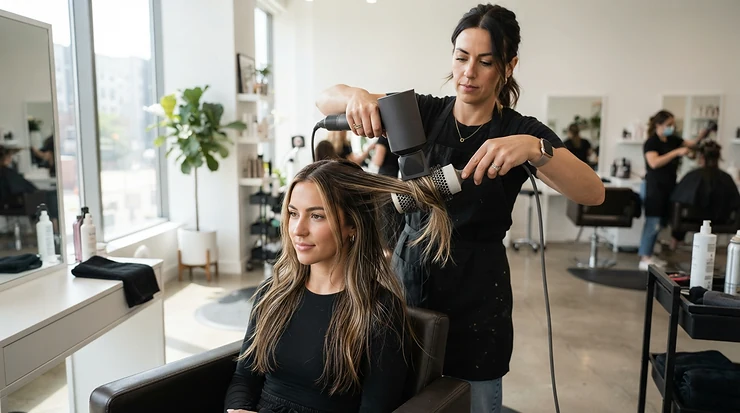
Your hair doesn’t owe you a comeback. Once the cuticle is cracked, it stays cracked. Hair is dead tissue and can’t patch itself up, so every blast of heat either adds to the damage or avoids adding to it. That’s why choosing a ceramic tourmaline dryer for fine damaged hair matters more than any serum, mask, or hopeful Pinterest board.
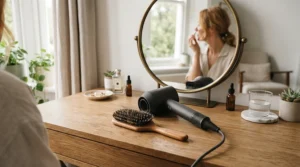
Fine strands are the diva of the hair world. They’re thinner, they lose moisture fast, and they punish careless heat. Add bleach, color, or years of daily styling and the margin for error shrinks to almost nothing. A ceramic tourmaline dryer won’t work miracles. It can, however, deliver steadier, lower-spike heat and shorter drying time, and for fragile hair those two things make the difference.
So this guide skips the marketing poetry. I compared seven real dryers by technology, weight, attachments, and value, using manufacturer specs and published buyer roundups. I also leaned on dermatology research to explain what temperature and distance really do to a strand. Tourmaline is a real mineral, and you can read the geology behind it on Wikipedia. Whether it earns its premium in a hair dryer is a fair question, and I’ll answer it honestly.
One note on method: I haven’t personally tested these dryers, and I won’t pretend otherwise. What follows is analysis built from specs, sourced research, and the patterns that show up across buyer roundups.
Quick Comparison: 7 Best Picks at a Glance
| Dryer | Core Tech | Price Range | Best For |
|---|---|---|---|
| Remington Damage Protection | Ceramic + ionic + tourmaline, 1875W | Roughly $20-$35 | Tight budgets, first-time buyers |
| Revlon Infrared Ionic Dryer | Infrared, ionic, tourmaline, ceramic coating | Roughly $25-$45 | Everyday value on thin hair |
| Andis Pro Dry 1875W | Tourmaline + ionic + ceramic, diffuser included | Roughly $40-$70 | Mid-range reliability |
| KISS 1875 Watt Pro Tourmaline Ceramic | Tourmaline ceramic, 1875W | Roughly $30-$55 | Straightforward salon-style drying |
| RED by Kiss 2200 PRO | Tourmaline ceramic, 2200W | Roughly $40-$70 | Fast drying on longer fine hair |
| BaBylissPRO Tourmaline Titanium | Titanium + tourmaline | Roughly $60-$110 | Stylists and frequent dryers |
| T3 Featherweight 2 | T3 Tourmaline infusion, ionic | Premium, roughly $150-$250 | Light weight, daily heat styling |
Prices are approximate ranges at the time of research and may vary, so check current pricing before buying.
A pattern jumps out. The budget picks cluster around 1875 watts, a power band that appears in fine-hair buying guides, and wattage doesn’t equal damage. Hot air at a controlled temperature is what counts. If you want the lowest entry cost, Remington Damage Protection is the logical door. If you dry daily and care about wrist strain, the premium T3 Featherweight 2 starts making financial sense. Everyone in between is paying for build quality and attachments.
💬 Just one click — help others make better buying decisions too!😊
Top 7 Ceramic Tourmaline Dryers: Expert Analysis
1. Remington Damage Protection — the gentlest entry price
The standout here is accessibility. This 1875-watt dryer packs ceramic, ionic, and tourmaline technology, plus a diffuser and a concentrator, into a package that sits at the bottom of the price ladder. That’s rare, and it’s why several buyer roundups use it as their “budget pick” or even “best overall.”
Key specs matter in practice. It offers three heat settings and weighs about a pound, and a lighter body means shorter, steadier passes without arm fatigue. Fatigue changes technique, and a tired arm tends to hold the nozzle too close. The removable filter is a quiet bonus: a clogged intake makes any dryer run hotter.
Who is it for? Anyone with fine, color-treated, or already stressed hair who wants gentle heat without a salon-tool bill. It suits beginners especially. The honest caveat is that this isn’t a motor built for thick, waist-length hair.
Aggregated roundup sentiment is positive, and the gentle-heat claim is the feature reviewers cite most. I couldn’t verify individual review counts, so treat the praise as a pattern, not a measurement.
Pros:
- ✅ Ceramic, ionic, and tourmaline at a budget price
- ✅ Diffuser and concentrator both included
- ✅ Light body reduces arm fatigue
Cons:
- ❌ Not powerful enough for very thick hair
- ❌ Plastic build feels less premium
Price: roughly $20-$35. Verdict: the best value starting point.

2. Revlon Infrared Ionic Dryer — infrared heat at a friendly price
This one’s hook is infrared. The design pairs tourmaline ionic technology with a ceramic coating, and roundups highlight it as a “best value” choice for fine and thin hair. Infrared-style heat, as marketed, warms the hair shaft more evenly instead of blasting the surface.
What does that mean for you? Manufacturers claim far-infrared heat penetrates the strand and shortens drying time. I’d treat the physics with caution, since independent proof is thin. The practical effect is still believable: if a dryer shortens contact time, fine hair benefits. Less time under heat means less cumulative stress.
On thin hair, one more point matters. Dryers in this class tend to be lighter than professional AC-motor models, and that makes sectioned, low-tension drying easier. If your hair breaks at the temples or crown, tension matters as much as temperature.
Buyer-roundup sentiment leans toward “good for the money” and “frizz control.” Again, the evidence I could verify is roundup placement, not raw review data. You should assume a motor built for convenience, not for decade-long salon duty.
Pros:
- ✅ Infrared and tourmaline ionic combination
- ✅ Gentle drying for fine, thin strands
- ✅ Strong value in a competitive range
Cons:
- ❌ Motor lifespan is likely shorter than salon models
- ❌ Fewer attachments than some rivals
Price: roughly $25-$45. Verdict: a smart middle road between bargain and brand-name.
3. Andis Pro Dry 1875W — dependable mid-range workhorse
Andis is a name barbers and stylists recognize, and this dryer shows it. The model combines crushed tourmaline, ionic generation, and a ceramic element at 1875 watts, with a diffuser included.
Ceramic components are the backbone of steady heat. They warm up gradually and spread temperature more evenly than bare metal coils, which means fewer hot spots. For damaged hair, hot spots are the enemy: a 20-second pause on one patch can undo an hour of careful conditioning.
My analytical take is that this is the dryer for people who want professional-feeling build without premium-brand pricing. The included diffuser also helps wavy or curly damaged hair dry with less direct airflow.
Verifiable review detail is limited here, so I’ll stay honest: product-page claims and brand reputation suggest durability, but I can’t point to a specific review count. If longevity matters to you, check current buyer comments on the listing before purchase.
Pros:
- ✅ Salon-brand build quality
- ✅ Tourmaline, ionic, and ceramic in one body
- ✅ Diffuser included for waves and curls
Cons:
- ❌ Heavier than featherweight competitors
- ❌ Higher cost than entry models
Price: roughly $40-$70. Verdict: solid value if you dry several times a week.
4. KISS 1875 Watt Pro Tourmaline Ceramic — no-nonsense salon style
Plain and capable, this is the dryer that doesn’t pretend to be anything but a tourmaline ceramic tool. It runs at 1875 watts and leans on tourmaline ceramic for steady heat, and buyer guides generally describe it as gentle on hair and scalp.
Think about what fine, damaged hair needs: stable output, a decent nozzle, and a motor that doesn’t scream. A 1875-watt dryer gives you headroom to run low heat at high airflow, which is the combination dermatology research favors.
The analytical edge is simplicity. Fewer gimmicks means fewer things to break. If you’ve been burned by flashy tools that disappointed, this approach has appeal.
For review sentiment, roundups treat it as a “solid choice” for gentle, effective drying. I couldn’t confirm star-rating specifics, so I won’t quote any.
Pros:
- ✅ Reliable tourmaline ceramic heat delivery
- ✅ Straightforward controls
- ✅ Fair price for salon-style build
Cons:
- ❌ Limited extras beyond core attachments
- ❌ Design feels utilitarian
Price: roughly $30-$55. Verdict: a safe, sensible all-rounder.
5. RED by Kiss 2200 PRO — more airflow for longer fine hair
Here’s the higher-wattage option. This 2200-watt tourmaline ceramic dryer targets people who want speed, and roundups describe it as quiet, efficient, and gentle on hair.
Wattage deserves a reality check. More watts doesn’t mean hotter output when heat settings can be lowered. It usually means more airflow capacity, and airflow does the actual drying. For long, fine hair that takes forever to dry, running low heat with strong airflow cuts total time under the nozzle.
That’s the logic that makes this pick interesting for damaged hair, as long as you keep the heat dial honest. Resist the temptation of the top setting just because it’s there.
Sentiment I could verify comes from roundup commentary calling it fast and efficient. Individual review data wasn’t verifiable.
Pros:
- ✅ Strong airflow for long, fine hair
- ✅ Tourmaline ceramic heat delivery
- ✅ Described as relatively quiet
Cons:
- ❌ High power tempts overheating habits
- ❌ Heavier feel on small hands
Price: roughly $40-$70. Verdict: best for length, not for tiny wrists.
6. BaBylissPRO Tourmaline Titanium — the stylist’s choice
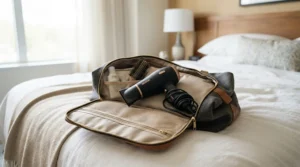
Combining titanium and tourmaline, this dryer is marketed for far-infrared heat and ions that speed drying and boost shine. The brand has deep roots in professional styling.
Titanium conducts heat quickly, so it can run hotter faster. That’s a pro tool’s strength and a damaged-hair weakness. In practice, you’d use its heat settings conservatively and rely on its power to shorten the session. This is a tool for someone who understands heat control.
My view: it’s better suited to people who dry frequently and want durability, not to anyone who might crank the dial out of habit. If you’re disciplined, it’s a long-lived investment.
Roundup coverage is generally favorable, though I couldn’t verify detailed review numbers. Check current buyer comments for noise and weight impressions.
Pros:
- ✅ Professional-grade durability
- ✅ Titanium and tourmaline combination
- ✅ Fast drying reduces total heat time
Cons:
- ❌ Titanium heats quickly, so discipline is required
- ❌ Costs more than ceramic-only rivals
Price: roughly $60-$110. Verdict: excellent if you respect the heat dial.
7. T3 Featherweight 2 — lightest premium for daily use
T3 builds its reputation on tourmaline. This model uses a patented tourmaline infusion that emits negative ions and infrared heat for faster, gentler drying, and the airflow exits in a wide cone to dry larger sections at once.
The wide cone is a big deal for fine hair. Covering more area per pass can shorten drying time, so each section spends less time exposed. And the “featherweight” label matters over a ten-minute dry.
Is it worth the premium? Honestly, only for certain people. If you style daily and your hands tire easily, or you simply want a durable tool you’ll keep for years, the cost per use drops fast. If you dry twice a week, the budget picks can do a similar job.
Reviews I could verify were mostly brand descriptions and roundup mentions, so I’m keeping claims modest.
Pros:
- ✅ Very light for long drying sessions
- ✅ Wide airflow cone speeds up sections
- ✅ Tourmaline infusion is a core design feature
Cons:
- ❌ Premium price is hard to justify for casual use
- ❌ Fewer included extras than budget kits
Price: roughly $150-$250. Verdict: a luxury that pays back only with frequent use.
Real-World Usage Guide: How to Dry Fragile Hair Step by Step
Technique counts as much as the tool. A great dryer used badly still damages hair, and a modest dryer used well can be gentle.
Step 1: Towel-blot, don’t rub. Press, don’t scrub. Rubbing fine wet hair is like roughing up wet paper. Wet hair is more fragile.
Step 2: Protect. Apply a heat protectant. It forms a film that slows heat transfer and limits moisture loss, though it doesn’t make heat free.
Step 3: Pick your distance. Keep the nozzle about 15 centimeters (roughly 6 inches) away, and keep it moving. Distance functions like a hidden temperature dial. Consumer Reports interviewed dermatologists who note that drying at the right distance and temperature can cause less damage than letting hair air-dry.
Step 4: Use the concentrator for control, the diffuser for texture. Attachments such as the diffuser on Remington Damage Protection or Andis Pro Dry 1875W spread airflow, which helps waves and curls.
Step 5: Finish cool. Use the cool shot to set the style and calm the cuticle.
First-30-day mistakes: holding the dryer in one place, drying to full bone-dry then repeating, and using the hottest setting from day one.
✨ Don’t Miss These Exclusive Deals!
🔍 Take your ceramic tourmaline dryer for fine damaged hair routine to the next level with these carefully selected products. Click on any highlighted item to check current pricing and availability. These tools will help you create smooth, healthy-looking results your hair will love!

Real-World Scenarios: Which Dryer Fits Which Person
Profiles beat generalities. Here are three, with reasoning.
The balayage regular on a budget. She colors every eight weeks, dries three times a week, and spends little on tools. The gentle, low-cost route is Remington Damage Protection or Revlon Infrared Ionic Dryer. Both give ceramic and tourmaline heat without a salon-level bill, and the lightness helps with section drying.
The daily-styler with thinning hair. He dries every morning, and any extra tension feels risky. The T3 Featherweight 2 earns its price here, because light weight and wide airflow reduce per-session time. If the budget says no, the KISS 1875 Watt Pro Tourmaline Ceramic is a respectable alternative.
The long-haired bleach blonde. Her hair is fine, long, and heavily processed, and it takes forever to dry. High airflow at low heat is the formula, which makes RED by Kiss 2200 PRO appealing. She’d pair it with a heat protectant and strict distance discipline.
For stylists or frequent users who want durability, the BaBylissPRO Tourmaline Titanium is the intended fit. The takeaway is simple: match the tool to your frequency, hair length, and discipline, not to the biggest number on the box.
Problem → Solution Guide for Damaged Hair
Problem: hair feels rough after drying. Solution: you likely used too much heat or held the nozzle too close. Lower the setting and increase distance. The American Academy of Dermatology notes in its tips for healthy hair that less heat and shorter contact times are kinder to hair.
Problem: frizz and static. Solution: ionic and tourmaline technology are designed to reduce static. A dryer such as the Andis Pro Dry 1875W may help, though it won’t fix a dehydrated strand. Pair it with a leave-in conditioner.
Problem: the dryer takes forever. Solution: long drying time means long heat exposure. A stronger airflow model like RED by Kiss 2200 PRO can shorten it. Towel-blotting properly first also helps.
Problem: arm fatigue and sloppy technique. Solution: choose a lighter dryer such as Remington Damage Protection or the T3 Featherweight 2.
Problem: ends keep breaking. Solution: reduce heat, add protectant, and schedule a trim. Hair that has split can’t be fused back together.
What Is a Ceramic Tourmaline Dryer for Fine Damaged Hair?
A ceramic tourmaline dryer for fine damaged hair is a blow dryer whose heating element or grille uses ceramic and crushed tourmaline to deliver steadier heat, with ions marketed to smooth the cuticle. It’s designed to shorten drying time and reduce hot spots on fragile strands.
Let me be straight about the evidence. Manufacturers say tourmaline emits negative ions and far-infrared heat. Shoppers can’t easily verify how many ions a given dryer produces, and I didn’t find an independent standard that defines “ionic” output. The reliable benefit is practical: ceramic tends to give more even heat than a bare metal coil, and a faster dry means less time under heat.
So treat tourmaline as a helpful feature, not a miracle. Heat control, distance, and technique still do the heavy lifting.
How to Choose a Ceramic Tourmaline Dryer for Fine Damaged Hair
- Look for adjustable heat. At least three heat settings let you stay low. Fixed high heat is a poor match for damaged hair.
- Check airflow, not only wattage. Strong airflow lets you dry fast at lower temperatures.
- Prioritize weight. A heavy dryer encourages shortcuts. Around a pound, as with Remington Damage Protection, is easy to manage.
- Confirm attachments. A concentrator controls airflow, and a diffuser softens it for waves and curls.
- Inspect the filter. A removable filter prevents overheating from dust.
- Weigh your frequency. Daily dryers justify spending more, while occasional users do fine with budget options.
- Read current buyer feedback. Check recent comments on the listing for noise, heat consistency, and durability.
Heat Settings: What Each Level Really Means
Heat settings are your steering wheel, and most people drive with the pedal to the floor. Here’s the science that matters. In a controlled study in the Annals of Dermatology, tresses were dried repeatedly at roughly 47°C, 61°C, and 95°C, and damage rose as the temperature climbed.
Translate that into practice. Use low or medium heat for fine and damaged hair, and save high heat for rare moments when you truly need speed. A three-setting dryer like Remington Damage Protection is plenty. Six-setting models such as the BaBylissPRO Tourmaline Titanium class give finer control but only help if you actually use the lower rungs.
A useful rule is to raise airflow before raising heat. Strong airflow does most of the drying, while heat just helps. And finish with the cool shot to calm the cuticle.
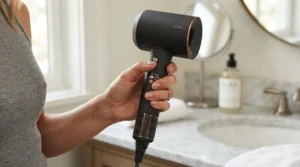
Gentle Heat Hair Dryer for Damaged Hair: What Actually Counts
A gentle heat hair dryer for damaged hair isn’t gentle because the label says so. It’s gentle because of four measurable things: lower, adjustable temperatures, even heat distribution, strong airflow, and short drying time.
Ceramic helps with the second point by avoiding the spikes of bare coils. Tourmaline and ionic features are marketed to help with the cuticle, though I’d rank them below heat control in importance.
Here’s the analysis that most buyers overlook: gentleness is behavior as much as hardware. A powerful dryer on low heat, kept moving at 15 centimeters, will treat your hair better than a “gentle” dryer held close on high. If you want a straightforward gentle heat hair dryer for damaged hair, start with Remington Damage Protection or Revlon Infrared Ionic Dryer, and let technique do the rest.
Tourmaline Blow Dryer for Thin Hair: Lighter Touch, Smarter Airflow
Thin hair has less mass to absorb stress, so it shows damage sooner and loses volume when over-dried. A tourmaline blow dryer for thin hair should be light, adjustable, and not aggressively powerful.
Lighter models make low-tension drying easier. The T3 Featherweight 2 leads the lightness argument, with the Remington Damage Protection a budget alternative. Skip heavy high-wattage tools unless you keep the heat low.
Technique tips: dry roots first, lift gently for volume, and finish with a cool shot. Avoid heavy oils right before drying, since they can weigh limp strands down. If tourmaline smoothing leaves your hair flatter than you like, try the diffuser attachment or a lower airflow setting to preserve body.
Split Ends and Heat Damage: What the Research Says
Here’s the finding that surprises people. In the Annals of Dermatology study, hair dried with a dryer at 15 cm with continuous motion caused less damage than natural air drying. Another look at the same research shows that the closest, hottest condition, 95°C at 5 cm, produced cracks and holes in the cuticle.
Two caveats apply. It was a small laboratory study, not a settled law. And blow-drying still caused more surface damage than air drying, so you’re trading one type of stress for another.
On split ends, the hard truth is that a trim is the only real fix. Better dryer habits slow new splits from forming, and that’s where the Andis Pro Dry 1875W or KISS 1875 Watt Pro Tourmaline Ceramic can help. For heat damage in general, the formula is repeatable: lower temperature, greater distance, constant motion, and shorter sessions.
Ceramic Tourmaline vs Traditional Dryers
| Feature | Ceramic Tourmaline Dryer | Traditional Metal-Coil Dryer | Best For |
|---|---|---|---|
| Heat evenness | More even, fewer hot spots | Can spike | Ceramic tourmaline for fragile hair |
| Frizz and static | Ion features marketed to reduce | Often more static | Andis Pro Dry 1875W users |
| Price | Moderate to premium | Often cheapest | Budget shoppers |
| Drying speed | Often faster | Variable | RED by Kiss 2200 PRO users |
The table suggests ceramic tourmaline earns its place mainly through even heat and convenience, not magic. If you only use a dryer occasionally, the gap shrinks. For damaged hair, though, avoiding hot spots is worth a modest premium.
Long-Term Cost and Value
Cost per use tells the real story. A dryer in the $20-$35 range, such as Remington Damage Protection, costs pennies per session over a year. A premium T3 Featherweight 2 costs more upfront, but if you dry daily for years and it lasts, the per-use cost narrows.
| Tier | Example | Price Range | Value Verdict |
|---|---|---|---|
| Budget | Remington Damage Protection | Roughly $20-$35 | Best entry value |
| Mid-range | Andis Pro Dry 1875W | Roughly $40-$70 | Balanced durability |
| Premium | T3 Featherweight 2 | Roughly $150-$250 | Best for daily heavy use |
Think of it this way: the cheapest dryer is expensive if it damages your hair, and the priciest is wasteful if it sits unused. Match spending to frequency, and replace any dryer that overheats, smells burnt, or loses its cool shot.
FAQ
❓ What heat setting is safest for fine, damaged hair?
❓ Does a tourmaline dryer actually reduce frizz?
❓ Is a ceramic dryer better than a metal one for thin hair?
❓ Can a dryer repair split ends?
❓ How often should I blow-dry damaged hair?
Conclusion
Choosing a ceramic tourmaline dryer for fine damaged hair comes down to a few honest priorities: adjustable low heat, strong airflow, light weight, and a price that matches how often you dry. Remington Damage Protection is the smart budget starting point, Andis Pro Dry 1875W and KISS 1875 Watt Pro Tourmaline Ceramic cover the dependable middle, RED by Kiss 2200 PRO serves long fine hair, BaBylissPRO Tourmaline Titanium suits disciplined frequent users, and T3 Featherweight 2 rewards daily stylers.
But remember the bigger lesson. Even the best dryer is only half the equation. Distance, motion, heat protectant, and low settings protect your strands more than any logo. Treat tourmaline as a helpful feature, not a rescue plan, and trim when ends split.
✨ Don’t Miss These Exclusive Deals!
🔍 Take your ceramic tourmaline dryer for fine damaged hair routine to the next level. Click on any highlighted product to check current pricing and availability, and give your hair the gentle heat it deserves!
Recommended for You
- High Speed Brushless Hair Dryer for Long Hair: 7 Fastest Picks (2026)
- Ionic Hair Dryer for Thick Curly Hair: 7 Ultimate Picks 2026
- Salon-Grade Hair Dryer for Home Blowouts: 7 Best Picks 2026
Disclaimer: This article contains affiliate links. As an Amazon Associate, I earn from qualifying purchases. If you purchase products through these links, we may earn a small commission at no additional cost to you.
✨ Found this helpful? Share it with your friends! 💬🤗
